How to Turn Time Anxiety Into Your Own Steady Pace. Time Freedom Mindset

How to Turn Time Anxiety Into Your Own Steady Pace

The Body-First Method That Stops the Rush and Returns You to Clarity

Time anxiety often begins long before a single thought forms. A quick surge in the body—a flutter in the chest, a tightening around the ribs, a sudden sense of activation—quickly turns into the feeling that you’re behind before the day has even started.

Women experience this more intensely because so much of our identity has been tied to being responsive, available, and in control of the moving parts around us. The world praises women who anticipate needs before anyone else notices them, so the nervous system learns to associate pressure with purpose.

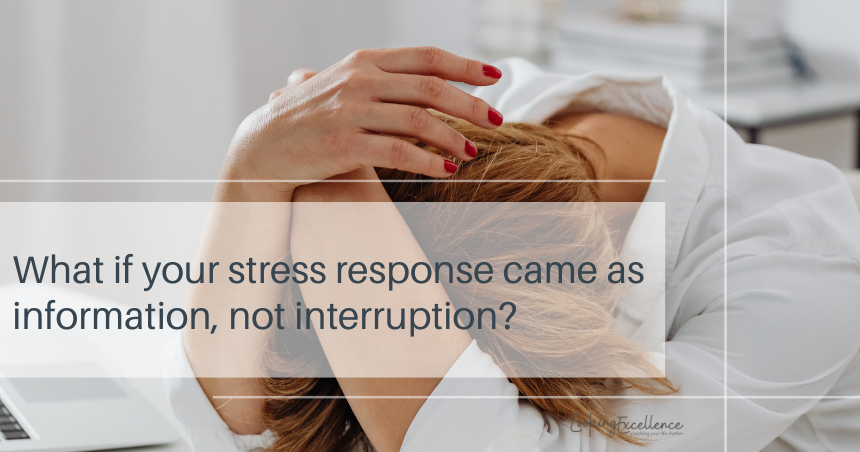
Here’s where the shift begins: time anxiety usually reflects sensation, not scarcity. The clock isn’t the one tightening your breath. Your body is signaling that your attention is stretched, your bandwidth is thinning, or your pace has slipped out of alignment with what you truly need.

Pause for a moment and ask yourself, ‘Is the clock truly the source, or is it the narrative you attach to these bodily cues?’ Inviting this inquiry can help disentangle external time from internal interpretation.

To bridge this sensory experience to cognition, try a simple two-step mini-practice:

  1. first, name the sensation you’re feeling. Is it tightness, fluttering, or something else?
  2. Then, identify the underlying need or desire behind it. In this moment, consider whether it’s rest, focus, or something different.
  3. As you do this, gently remind yourself with a self-soothing phrase like ‘This too belongs.’

This practice, reinforced by kindness, can help translate bodily cues into actionable insights.

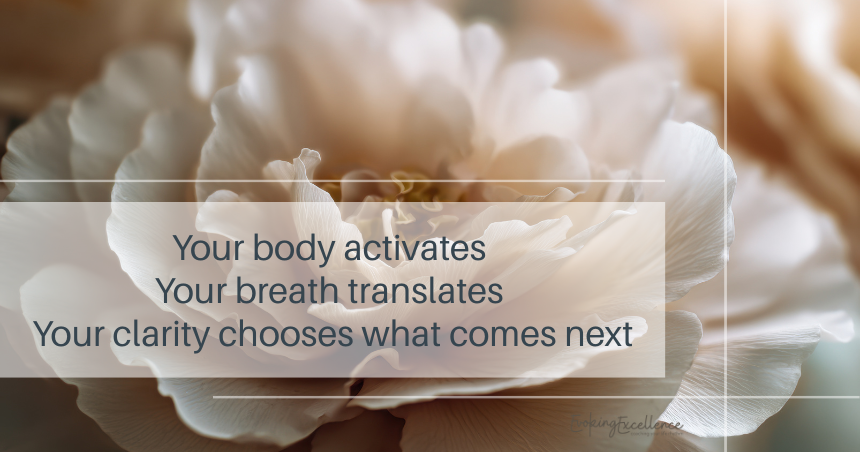
When you pause and recognize the emotion before it becomes a feeling, the entire experience changes. One deep breath gives your mind the space it needs to choose a direction rather than react to intensity.

The moment you name what’s happening—this is activation, not failure—you reclaim your ability to lead the moment.

This awareness becomes a form of time freedom.

  • You no longer chase the fear of being behind.
  • You guide yourself toward what matters with clarity, calm leadership, and a pace that becomes more accurate than fast.
  • Time expands when your presence leads it.
By aligning your pace with values such as contribution, creativity, and connection, you transform fleeting moments into purposeful achievements. When your actions are driven by what truly matters to you, time not only expands, it becomes a powerful ally, turning your intentions into reality.

• • •

Questions You Might Have

Before diving into these questions and answers, it’s important to recognize that the goal is to cultivate mindfulness and self-awareness amid daily challenges. These responses are designed to guide you gently towards integrating calm and clarity in your everyday life. This content offers general educational information and is not a substitute for professional medical or mental health advice

How can I consistently practice these steps during a busy or stressful day?

At the core of Mindfulness-Based Cognitive Therapy is the principle of observing rather than correcting. This gentle, nonjudgmental noticing rewires your emotional habits over time.

Start small so your nervous system sees it as natural, not “one more task.”

A single breath, a hand on your chest, a brief “what’s the sensation now?”—these check-ins build awareness without disruption.

Link a check-in with daily activities.

Breathe when unlocking your phone, place a hand on your chest at your desk, or ask “what’s the sensation right now?” while pouring coffee.

These actions create familiar pauses for calm. Consistency arises from moments, not minutes.

Honor small cues so your system learns to steady in real time.

Do these strategies work for women with different backgrounds, responsibilities, or neurodiversity?

Yes, because these practices begin with the body’s internal signals, not a one-size-fits-all routine.

Imagine a woman juggling tasks from waking up, preparing breakfast, rushing to work, meeting commitments, and caring for herself. Her roles leave little time for mindfulness. Yet these strategies fit any lifestyle.

Every woman’s reality shapes her sensations. Honoring these differences is key. Whether your days feel structured, unpredictable, overstimulating, or relational, tuning into the body creates a rhythm that adapts to your life.

It becomes your guiding method rather than an imposed routine.

The key is to observe sensations with curiosity rather than pressure. Let the experience unfold in a way that suits your mind and nervous system. Do a quick body scan and notice how your feet feel on the floor. This bridges awareness from theory to real life and helps weave mindfulness into your moments.

What should I do if naming sensations and needs doesn’t bring relief or clarity?

Stay curious, not forceful. Sometimes the body needs to be witnessed before it softens. Naming sensations isn’t about instant relief—it’s about connecting to internal signals you’ve been taught to bypass.

If clarity doesn’t come, simply acknowledge what you notice and let that be enough. Embrace uncertainty as a space for your mind to rest, like making space for fog in a landscape.

This is where science reassures: understanding ‘tolerance for ambiguity’ shows that adapting to ambiguity is not a pause but progress. It shows that the brain is undergoing neuroplastic change, which is vital for building long-term resilience and mindfulness.

To help, try a 30-second ‘breath-label-pause’ sequence: breathe deeply, label your sensation, and pause. This micro-practice offers structure to stay present and engaged, even in the face of uncertainty. Gentle noticing builds inner trust, and clarity often follows once the system feels safe to share what it’s held.

Allow the sensation to be present without trying to change it—this acceptance is what gradually untangles the mental loops around discomfort.

Is it normal to struggle with this process or feel resistance at first?

Absolutely. After years of urgency or responsibility, slowing down feels foreign. Resistance isn’t failure; it’s your system recalibrating. The body protects old habits, even when you seek change.  Notice the resistance with the same gentle awareness you’d offer any emotion—naming it creates space between the feeling and your next choice.

Ask: “What story is resistance telling me?” See resistance as data, not a detour, and make it a mindful inquiry. With practice, resistance softens, and what felt unnatural becomes baseline. Growth begins in awkward moments.

Consider incorporating a quick three-step practice: name, breathe, choose. Start by naming the feeling you’re experiencing, take a deep breath to create a moment of pause, and then choose your next action with clarity. This loop not only heightens awareness but also connects it to actionable outcomes.

Bibi Ohlsson Strengths-based coaching. About. Evoking Excellence

Written by: Bibi Ohlsson

I write in the space where life tilts—those small, unmistakable moments when something inside you moves first, and the rest of your world begins to follow. This is where recognition becomes direction. Here, we explore the questions that stretch you, the patterns that reveal you, and the subtle shifts that quietly rewire the way you meet your days. If you sense a truer version of your life just within reach, you’re already in the right place.

What you read here is meant to spark ideas and offer education—not to replace medical, mental health, financial, or legal guidance.
Disclaimer

My Blog. Your Rhythm
It’s a calm space in your inbox each month — no noise, no rush, just thoughtful insight you can return to in your own time. Because insight lands best when it meets your pace.
Name
Checkboxes
Know yourself. Lead from within. Positive Psychology-driven coaching

Becoming Your Own Role Model
How to Restart Your Life - Inside Out

Self-paced, transformative online coaching experience. Designed to help you restart your life by tapping your strengths and values, so you can nurture Your Life Rhythm. From within. Comming soon!

Discover how:

Create a Life That Feels True to You

Living authentically changes everything. When vulnerability, values, and adaptability come together, you stop striving for someone else’s version of success and start building a life that feels fulfilling and true to you. It’s a powerful transformation. If this speaks to you, let’s explore how to bring it into your life.

Learn More
coach led course. Living the Essentials

Living the Essentials
Flourishing in Harmony

Four-week intensive, transformative coaching experience. Designed to help you cultivate The Eleven Essentials for Everyday Harmony™. Client-driven & Coach-led course including personalized coaching, making it your path to flourishing - not as an achievement, but as a way of being.