

Leading Your Day with Calm Focus:
The Power of Regulated Energy in a Busy World
High-functioning anxiety is a survival skill that can look like ambition. Discover lasting calm by tuning into your body’s signals, matching your effort to your actual energy, and setting boundaries that move with your life. Focus and output grow when you choose where your attention goes. Ambition is not defined by how much you can push through. And your worth is bigger than what you produce.
Performative Productivity | When staying visibly busy replaces moving meaningfully forward
Her hand hovers above the keyboard, heart pounding, jaw clenched so tight she tastes metal. It’s 7:03 a.m., and before her brain can even form words, her body is already bracing for battle. Is this ambition fueled by something messier? A kind of anxiety that hides behind productivity. Relentless, but rarely recognized for what it is.
What if what you call high-functioning is really your nervous system in survival mode?
Productivity Myths
Most conventional productivity methods tell you to just keep going. This way of thinking treats you like a machine and overlooks the emotional and physical cost of constant stress. It’s no wonder, then, that when anxiety shows up, it’s labeled as a defect rather than a signal. High-functioning anxiety is often seen as a personal flaw, something you should fix with the next quick mindset trick.
But high-functioning anxiety is your body’s way of keeping you alive in a world that keeps asking for more. An adaptive survival strategy, a long-term stress response that can look a lot like ambition.
To find relief from high-functioning anxiety, we need to change how we relate to productivity. We also need to question the idea that our worth is only about what we get done. That change starts small, often in the body, before it reaches the mind.
Emotional Awareness
Building sustainable productivity habits starts with emotional awareness. This understanding is the foundation for any real shift in how we work and live. Instead of trying to fix your feelings, begin by noticing them. If you feel that familiar flutter in your chest at the start of the day, most advice says to push through. Instead, pause and take a breath before you begin. If you need a deeper reset, try inhaling through your nose for four counts and exhaling for eight. Remember, physical tension is just information, not a signal to speed up. When you listen to what your body is telling you, you can start asking a new question — not how hard to push, but where your energy really is.
Lasting productivity comes from matching your effort to your real capacity. If you have the most energy and focus in the morning, save your most demanding work for that time. Routine tasks can wait until your energy dips. Building systems that fit your natural rhythms and include breaks can help you avoid the old cycle of intense focus followed by burnout. Being honest about your capacity is a boundary in itself, and it helps shape your whole day.
You’ll get further by honoring your rhythm than by chasing ambition that demands you ignore yourself.
Healthy Boundaries
The most realistic kind of balance is a daily rhythm that changes with your life. It’s built on the honesty of knowing your limits as they are today, not as you wish they were.
Clear boundaries make that rhythm possible. For example, you might decide when to stop checking your phone in the evening. These lines give you space to rest and the flexibility to handle each day’s changing demands, especially during tough moments when grounding matters most.
You can fit stress relief into your day with short grounding moments, instead of long rituals that take up your time. A one-minute breathing pause — close your eyes if you want, breathe in for four counts, hold for four, and breathe out for four — is often enough to calm your system and break the cycle of stress.
Intentional Choices
With these boundaries in place, you create the space needed to make more intentional decisions. Each time you pause, you create space to choose. You get to decide which task deserves your attention next. Making that choice is what leads to a calmer mind. Because instead of reacting to whatever feels most urgent, you choose where to put your attention.
It begins by noticing what’s really happening. When you catch yourself drifting, pause and quietly name the feeling you find, without judging it. From this place of awareness, refocusing comes naturally.
These habits add up to real, lasting energy, letting you guide your day instead of pushing through it. And gradually, you find you’re living differently.
It’s 3:30, and her hand still hovers above the keyboard. But now she feels her own pulse. The metallic taste is gone. Her new mantra: ambition that listens is stronger than ambition that clinches.
What if she stopped measuring her worth by output — who might she then become when nobody’s watching?
Calm focus is one layer; the last piece in this series looks at the difference between managing your clock and managing your energy. Round it out with Lead Your Day Without Pressure, Through Quiet Productivity.
Moments with breah
A Day Shaped by Calm Focus
She woke before the alarm and lay still in the quiet, when the pull toward something more was easiest to notice. It was a longing for a life that felt more like her own, even though nothing in her life was actually broken. When her feet touched the floor, she felt the weight of the day ahead, with hours already spoken for by demands that did not fully belong to her.
She let the feeling settle into information about herself, setting it aside as she stood up to start the day.
Wednesday went as usual until about six, when a call ran late and overlapped with dinner time. She held the phone to her ear while raw ingredients waited on the counter, both asking for her attention at once. For a moment, she did not respond to either. Her shoulders relaxed a little, her breathing slowed, and a calm quiet filled the room. She took the time she needed, said a clear and kind goodbye to end the call, put the phone down, and let dinner wait ten minutes while she caught her breath.
Around eight, after having had a slow dinner and a cup of tea, she opened the back door. The cool night air surprised her, and she walked toward the old live oak tree down the street. Touching the tree, she did her gratitude practice, naming things she was grateful for. Her mind wandered to a plan she had made for tomorrow. She stayed outside in the stillness for fifteen calm minutes, alone, holding onto that simple hope as she walked back toward the porch light.
She got into bed feeling steadier than she had when she first woke up. The longing was still there, always had been, resting next to the things she was grateful for. Tomorrow is already something to look forward
— Bibi ohlsson
Sample a course in Personal Energy Management. Visit The Tasting Room – a curated selection of courses — designed to give you a genuine experience of the work. Enough to shift something. Enough to know. Short in form. Real in impact.
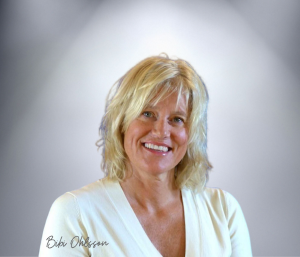
Bibi Ohlsson
I write in the space where life tilts—those small, unmistakable moments when something inside you moves first, and the rest of your world begins to follow.
This is where recognition becomes direction.
Here, we explore the questions that stretch you, the patterns that reveal you, and the subtle shifts that quietly rewire the way you meet your days.
If you sense a truer version of your life just within reach, you’re already in the right place.
What you read here is meant to spark ideas and offer education—not to replace medical, mental health, financial, or legal guidance.
Disclaimer